Blog
  • 10.12.2020

TIMSS 2019 shows support for teachers’ professional development is needed more than ever during COVID-19

Read the UNESCO/IEA report on TIMSS 2019 in English, French and Spanish

***

The latest Trends in International Mathematics and Science Study (TIMSS) shows that teachers’ qualifications continued to vary substantially between 64 high- and middle-income countries in 2019. In addition, many countries did not ensure that all teachers participated in substantial quantities of in-service training. The COVID-19 pandemic in 2020 has thrown these deficits into sharp relief, emphasizing the crucial role of teachers’ professional development.

Teachers’ qualifications and training feature in a new report by the International Association for the Evaluation of Educational Achievement (IEA), in collaboration with UNESCO, which examines TIMSS 2019 data that shed light on countries’ progress towards achieving the fourth Sustainable Development Goal (“Ensure inclusive and equitable quality education and promote lifelong learning opportunities for all”). The report includes two key teacher indicators: the proportion of teachers with the minimum required qualifications, by education level (Global Indicator 4.c.1); and the percentage of teachers who received in-service training in the last 12 months by type of training (Thematic Indicator 4.c.7).


Teachers’ initial qualifications vary according to level of education

Although there is no international agreement yet of how to define a teacher that is qualified, teachers at all levels require high standards of initial formal education, including subject-matter knowledge and pedagogical skills to teach. Moreover, it is generally accepted that those teaching science, technology, engineering and mathematics (STEM) subjects at higher levels and grades of education require increasingly expert knowledge and skills (UIS, 2006). Collecting data on the highest level of formal education completed by mathematics and science teachers, data from participating countries show Grade 8 mathematics teachers had higher qualifications on average, with 95% of students being taught by a teacher who had at least a bachelor’s or equivalent degree, compared with 85% of their Grade 4 peers. Some countries demonstrated very large gaps between grades. For example, Italy had the highest percentage of Grade 8 students whose teachers had a postgraduate level qualification (100%), but also the highest percentage of Grade 4 students whose mathematics teachers only had a secondary level qualification (59%). Other large gaps between Grade 8 and 4, such as the percentage of students taught by a mathematics teacher who had at least a bachelor’s degree or equivalent, were observed in the Russian Federation (99% and 75%) and South Africa (79% and 62%).


Countries can reinforce teacher qualifications to support teacher knowledge and skills

Reinforcing formal teaching qualifications by increasing standards or by facilitating current teachers to achieve minimum qualifications can enhance the quality of teaching and learning. As of 2013, Italy requires tertiary-level qualifications to teach primary level mathematics (IEA, 2016). In some middle-income countries, a sizeable share of Grade 4 students also continued to be taught by teachers who only had at most a secondary education qualification, including Albania (19%), Pakistan (36%) and Armenia (40%). In Morocco, high percentages of students were taught by teachers with just secondary level qualifications in Grade 4 (43%) and Grade 8 (34%). Means to facilitate teacher efforts to meet current minimum qualifications include incentive programmes such as financial aid and tuition waivers, flexible schedules and the availability of online education as in Pakistan (ADB, 2019).


Many teachers lack in-service training opportunities

In-service continuing professional development can help teachers achieve higher level qualifications. It also builds their professionalism through the acquisition of new knowledge and skills about pedagogy, ICTs, assessment and other areas. Surveying whether teachers have received in-service training, related TIMSS data are expressed in terms of the percentage of students who are being taught by teachers who had received at least 35 hours of professional development during the two years before the assessment. On average, Grade 8 students (23%) were more than twice as likely as their Grade 4 peers (10%) to have been taught by a teacher who received at least the minimum 35 hours of professional development.

In Croatia, no Grade 4 teachers were reported to have met the threshold for in-service training. Meanwhile, training levels were also very low in countries that generally have a strong reputation for their education system, such as Japan (1% in Grade 4 and 6% in Grade 8) and Finland (2% and 6%). With the rapid shift to remote education at the onset of COVID-19 and the need for distance teaching skills, such a lack of training may not be sustainable. For example, prior to COVID-19, 71% of Grade 8 students across all countries were taught by teachers who indicated a need for future professional development on integrating technology into mathematics instruction. Institutionalized training, in contrast, appears common in Kazakhstan (30% in Grade 4 and 61% in Grade 8) and the Russian Federation (32% and 71%).


Lack of ICTs in schools

With teachers working remotely during school closures and children using available household ICT, the already large digital divide was underlined, especially in middle- and low-income countries where household Internet access is far from ubiquitous. The Teacher Task Force previously estimated that 43% of learners globally lacked household Internet (Teacher Task Force, 2020). TIMSS results demonstrate additional inequities in schools. In Grade 8, across all countries surveyed, there were 2.8 students per computer in urban and 4.1 students per computer in rural schools. Turkey had the highest disparity with a ratio of 3.4 in urban and 10.3 in rural schools, while Lebanon showed a reverse disparity of 8.4 in urban and 5.0 in rural schools.


Policy implications for teachers

Since the TIMSS 2019 data collection started in the first half of 2019, before the COVID-19 pandemic, it provides a baseline against which to gauge how changes implemented during and after the pandemic may have affected education and teachers. The rapid transition to distance education has also taught us the need for fresher and more reliable data so policy-makers can make decisions on a real-time basis.

It is critical that governments respond by improving teacher quality. In the medium-term this includes enhancing standards for initial teacher education and continuous professional development to strengthen teacher resilience. In the short term, based on the finding of few in-service training opportunities for teachers, particularly in Grade 4, additional training or a more equitable distribution of resources based on critical needs is required. Digital and remote teaching skills, especially where hybrid learning models are used, are important to reduce students’ learning loss. This is true for high-income countries where in-service training is less common and for middle-income countries, to improve upon teachers’ lower initial qualifications.

Digital divides should also be minimized, ensuring that teachers and students have access to the Internet and a range of technologies, including radio and television, in both urban and rural settings.

Online learning allows for greater anonymity in communication between students and teachers, and among students, which can allow bullying. Better responses to combat cyber-bullying are needed, such as awareness and sensitization campaigns, training for teachers, and mechanisms for handling complaints. According to TIMSS 2019, this need exists for both grades, but perhaps especially for Grade 4 where it is reported more frequently.

COVID-19 could set education back by many years and erase much of the progress of the previous decade. Efforts to achieve SDG4, including Target 4.c, would benefit from richer and more comprehensive data to inform decision-making. Extending TIMSS data collection to additional countries would be a step towards meeting growing needs. Another step could include expanding the set of indicators to include a more comprehensive view of teachers’ context and needs based on all SDG 4.c indicators, including pupil-qualified teacher ratios, teacher salaries relative to similar professions, and teacher attrition.

TIMSS is a large-scale assessment of education achievement with the aim to gain an in-depth understanding of the effects of policies and practices within and across systems of education. Providing internationally comparative data on how students perform in mathematics and science at Grade 4 and Grade 8, the TIMSS 2019 surveys gather information about curriculum, instructional practices and school resources known to be associated with learning and students' achievement. TIMSS 2019 covers 72 educational systems, including 64 high- and middle-income countries and dependent territories, and 8 benchmarking jurisdictions.

***

Read the UNESCO/IEA report on TIMSS 2019 in English, French and Spanish

***

Photo credit: Shutterstock/AVAVA

News
  • 19.11.2020

Together with the OECD we are crowdsourcing school innovations

Innovative school responses in the Covid-19 context

Schools are playing a frontline role in the world’s efforts to respond to the Covid-19 pandemic. Teachers, school leaders, educators have responded in innovative ways to serve their students and their communities. Identifying and leveraging these innovations is key to:

  • Supporting other teachers who are facing similar changes and challenges around the globe.
  • Shaping society’s efforts to build stronger classrooms for the future.
  • Recognising the unwavering dedication and commitment of the profession.

We invite partners to join a campaign to support schools to have their innovations heard at a global scale and to foster a cross-country dialogue around rebuilding education out of these challenging and testing times.


Crowdsourcing school innovations

From 16 November to 20 December 2020, teachers, teacher educators and school leaders can upload a two-minute video to share their insights on three important questions:

  • What innovations in your teaching are you most proud of?
  • What new forms of collaboration with your peers have been most helpful?
  • What have you learnt and what will your teaching look like in the future?

Many organisations are working hard to support teachers in this space. If your organisation has already done a similar exercise to identify innovations, please invite those teachers or schools leaders from the most promising innovations you have identified to share their video. In this case, the contributions will appear under the logo of your organisation.


Identifying and leveraging the most promising innovations

The international teaching community will be able to watch and engage with videos through the OECD’s Global Teaching InSights platform. Alongside an international panel, teachers will also be able to identify the innovations that can have a long-lasting impact at scale.

A series of global events and opportunities will bring together teachers, school leaders, policymakers and researchers to discuss the leading ideas and innovations of these videos and what they mean for education going forward.

This campaign is led by the OECD, UNESCO and the International Task Force on Teachers for Education 2030 (TTF) with the support of Education International, Teach for All and the International Confederation of Principals.


Social media campaign

Follow the Hashtag: #GlobalTeachingInSights on the Teacher Task Force and OECD Education Twitter accounts.

Visit the Global Teaching InSights platform.
 

Event
  • 27.11.2020

Global Teacher Prize 2020 Winner Ceremony

Sunny Varkey cordially invites you to the virtual Global Teacher Prize 2020 Winner Ceremony.  

Join to pay tribute to the world’s teachers, and to find out who will be the winner of the 2020 US$1 million Global Teacher Prize. 

Hosted by Stephen Fry at the Natural History Museum, London Thursday 3rd December 2020 11:00am – 11:45am GMT

Sign up to watch online: www.globalteacherprize.org

Blog
  • 25.11.2020

Pandemic shines a light on teachers’ leadership roles worldwide

While the COVID-19 pandemic has caused unprecedented disruption to teaching and learning, it has also shone a bright light on the core strength of education worldwide: the leadership, creativity and ingenuity of teachers. That’s why the theme of World Teachers’ Day on 5 October this year was Teachers: Leading in crisis, reimagining the future”.

To coincide with World Teachers’ Day and explore this theme, the Teacher Task Force organized a series of regional discussions on the key role of leadership in solving problems during the COVID-19 pandemic and strengthening the resilience of education systems. Building on the regional meetings in May and June 2020 on distance teaching and the return to school, five discussions were held:

These meetings gave representatives from a wide range of countries an opportunity to highlight the way teachers have shown leadership not only in their teaching but also right across the school and in partnership with parents and the community.

The need to organize and deliver remote learning during lockdowns, for example, drew many ingenious responses from teachers. In Rwanda, teachers wrote scripts for and taught radio lessons. In both Rwanda and Lebanon, teachers taught television lessons.  

Where no technology was available, teachers in the Democratic Republic of the Congo visited pupils door-to-door to deposit and collect school work.

Social media came to the fore in several countries. Teachers in Pakistan started informal WhatsApp classes. In Bhutan, teachers used WeChat, WhatsApp and Telegram Messenger for teaching.

Teachers also demonstrated considerable leadership in their roles as front line workers in the fight against COVID-19, raising general awareness about strict hygiene protocols and ensuring these were respected. In Senegal, teachers took ownership of the design and radio broadcasting of preventive messages against COVID-19. In Bhutan, teachers even repaired fittings and built taps.

School leaders have been instrumental in showing leadership and mentoring other teachers. In Senegal, school leaders helped teachers to produce digital resources, jointly with inspectors and trainers. In Thailand, school leaders encouraged teachers to develop computer programmes for online learning management. In China, school leaders led initiatives emphasizing researching at home, reading, and group study, involving interactions between teachers, parents and students.

Participants in the meetings also explained how school leaders and teachers were working with communities and parents to ensure the continuation of remote teaching and learning, and provide a safe and healthy learning environment.

In the Gambia, for example, community members were trained along with teachers and students to provide leadership and help ensure a safe return to school. In the Balata Refugee Camp in Palestine, students are involved in decision-making through a children’s parliament, working in partnership with teachers and parent coordinators.

The meetings developed a set of recommendations to support teacher leadership both during the COVID-19 crisis and in the longer-term to build better school and teacher resilience.  They included:

  • Teachers’ leadership role should be formalized in teacher policies, education sector plans, professional development frameworks and salaries.
  • Teachers should be encouraged, supported and empowered to embrace their leadership roles.
  • Teachers’ leadership roles should be acknowledged by giving them greater professional autonomy.
  • Teachers’ leadership during the COVID-19 pandemic should be acknowledged and rewarded including through incentives and career paths and structures.
  • Holistic support for teachers, with an increased focus on their psychological and socio-emotional well-being, is the key to fostering a leadership mindset.

Read the full report on the Teacher Task Force Regional Meetings to mark World Teachers’ Day, 5 October 2020.

Event
  • 20.11.2020

Crowdsourcing school innovations

From 16 November to 20 December 2020, teachers, teacher educators and school leaders can upload a two-minute video to share their insights on three important questions:

  • What innovations in your teaching are you most proud of?
  • What new forms of collaboration with your peers have been most helpful?
  • What have you learnt and what will your teaching look like in the future?

Many organisations are working hard to support teachers in this space. If your organisation has already done a similar exercise to identify innovations, please invite those teachers or schools leaders from the most promising innovations you have identified to share their video. In this case, the contributions will appear under the logo of your organisation.

Read more here and submit your videos to the OECD Global Teaching InSights platform.

Blog
  • 12.11.2020

Attacks on teachers are frighteningly common. How can we ensure school safety?

On Monday 2 November 2020, gunmen shot dead 22 students and teachers at Kabul University, Afghanistan. Barely a week had passed since gunmen entered a school in Kumba, Cameroon, and killed seven children. A week before that, the beheading of French teacher Samuel Paty had also shocked the world. 

These attacks on students and teachers are horrific, but not a new phenomenon. Across the globe there were over 7,300 direct attacks on schools between 2015 and 2019, according to the Education Under Attack 2020 report published earlier this year by the Global Coalition to Protect Education from Attack (GCPEA). An estimated 22,000 students, teachers and other education personnel were harmed in total.

Why are schools being attacked? The report identified multiple reasons, including conflicting and discordant ideologies between the educational system and various armed groups in a number of countries. “Islamic State”, for example, claimed responsibility for the Kabul University shooting and another recent suicide bombing on a higher education centre in the city.

Another reason is that government-run schools and universities may be viewed as symbols of state power and control, and therefore targeted by groups fighting the state.” This is the underlying cause of multiple attacks on schools in Cameroon in the last four years, as linguistic minority groups aim to seek greater autonomy from the state

Three teachers were killed in the space of a week in early 2018, as the number of primary-aged children attending school in the country’s Anglophone provinces reportedly fell to just four percent. Nobody has claimed responsibility for the latest attack, however: the government accused the separatists, while separatist leaders blamed government soldiers.

Schools may also be attacked when they are used as polling stations in elections, or because state or non-state armed groups locate bases in or near them. This has been a problem in Syria in particular, where 16 of 22 schools identified by the UN in 2017 as being used for military purposes were subsequently attacked.

The worst-hit countries over the last five years, according to the GCPEA report, are the Democratic Republic of Congo and Yemen – but the problem reaches far beyond war-torn trouble spots. The report identifies eleven “very heavily affected” countries, including India (with attacks concentrated in Jammu and Kashmir), Turkey (in relation to state anti-terror laws and conflict with the Kurdistan Workers’ Party) and the Philippines (notably affecting indigenous peoples).


Al Jazeera English
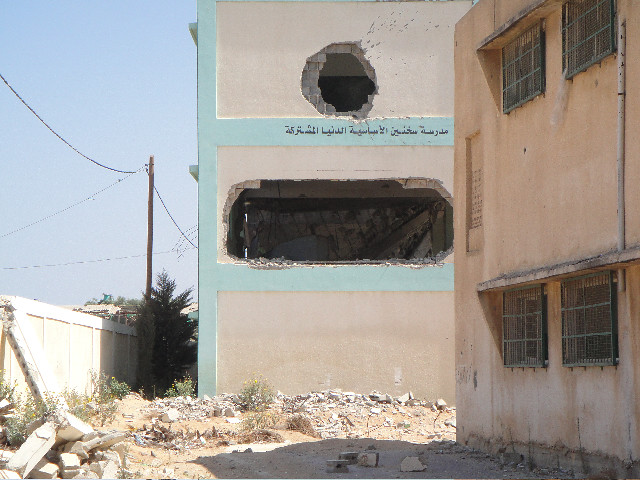
A bombed school destroyed in Gaza, Israel in 2009
Photo credit by Al Jazeera English


How do you ensure schools’ civilian status?

The report’s top recommendation is that states approve and promote the Safe Schools Declaration. Drawn up in 2015 in a process led by Norway and Argentina, it encourages parties engaged in armed conflict to respect the civilian nature of schools. The report finds positive signs that it may already be having an impact: 12 countries with reported military use of schools signed up to the declaration in 2015, and by 2018 their incidence of military school use had roughly halved.

Determining how best to protect schools, teachers and their students without further politicising them is a difficult balance. As one teacher in a private school in Kumba, Cameroon told Human Rights Watch after the attack last month, “We don’t want soldiers in the classrooms because the neutrality of schools should be preserved, but we deserve better protection.”

In 2016, a Human Rights Watch report on Afghanistan’s Baghlan province noted that the military often use schools as bases in villages where they are the only reinforced-concrete structure: “Children are being put in harm’s way by the very Afghan forces mandated to protect them”, noted the senior researcher. 

The report’s other recommendations include developing school safety plans and early warning systems in close collaboration with local communities and civil society organisations that understand local contexts.

Michaël Prazan, a former teacher, told the BBC that Samuel Paty’s murder highlighted the need for early warnings to protect teachers and students: “We need to be more responsive,” he said referring to helping vulnerable students displaying troubling behaviour. “We need to deal with it quickly before it spills over onto the internet and a death threat for the teacher."

However, teachers may struggle to do this alone. Udo Beckmann, who leads a teaching union in Germany, told Deutsche Welle that teachers in his country’s schools need more training and assistance from psychologists and social workers.

Ultimately, as French teaching unions pointed out in a joint statement on Samuel Paty, the safety of teachers depends on support from across society for them to carry out their professional vocation – preparing the next generation of citizens. 

Photo caption: A bombed school in Yemen in 2013
Credit: Julien Harneis

Blog
  • 04.11.2020

Teacher salaries rarely reflect the importance of their job. Why don’t we pay them enough?

The COVID-19 pandemic has shown us just how important teachers are. As schools have shuttered, teachers have become a lifeline for students, going to extraordinary lengths to keep their pupils learning. Their job is vital. And with class preparation, homework marking, extra-curricular activities and pastoral care all to do, on top of teaching classes, teachers' workloads can be relentless. But as a recent report from the International Institute for Educational Planning shows, teacher salaries rarely reflect the size and importance of the job. So why don’t we pay them enough?


A salary crisis

In many cases, teachers are paid less now than they were 20 years ago. According to the latest OECD ‘Education at a Glance’ report, teachers’ salaries have decreased (in real terms) in a third of countries since 2000. After the 2009 financial crisis, teachers’ average salaries were either frozen or cut across all countries, only starting to climb again after 2013. Even now, in ostensibly wealthy nations, teachers are underpaid. Take the USA, where data from 2018 show that teachers are paid 22% less than peers who have the same level of college education and a similar number of years’ experience.


Better pay, better teachers

The effects of this pay disparity are serious, and it is quickly developing into a crisis. Low salaries make it harder to attract new teachers and retain those already in the profession. When college graduates see their peers offered better salaries and a better lifestyle in other professions, it can become difficult to convince them to pursue teaching. 

It has been shown that increasing starting salaries would make teaching more appealing, increasing competition for jobs and raising the standard of applicants. As a consequence the social status of teaching as a profession would rise, boosting teacher motivation.

As for retention, it’s often the best teachers – those who work the hardest and go above-and-beyond for their students – that become disillusioned when their efforts go unrecognised. Eventually, many are driven to seek a better lifestyle in another line of work. 


Better teachers, better societies

Investing to attract better teachers yields both short and long-term benefits for students and for society as a whole. Research shows a direct correlation between teacher pay and student performance – a 10% pay increase is likely to lead to a 5-10% increase in student performance. 

What should not be overlooked are the long-term benefits of good teaching. Better-performing students are more likely to go on to further studies and earn more. They are also less likely to fall pregnant at a young age.


What needs to happen

There’s no good argument against raising teachers’ salaries. In times of financial hardship, it can be tempting for governments to see teacher salaries, the single biggest expenditure in education, as an easy target for cuts. That was the attitude in 2008, and now with the pandemic looming that temptation could return. But that would be a short-term fix to society’s long-term detriment -- and teachers won’t stand for it. Around the world, teachers have expressed their dissatisfaction with educational reforms that have shied away from raising salaries. In Ecuador and Ethiopia, reforms to teaching as a career have had little impact on the profession’s appeal, at least while low salaries determine its social status. On the other hand, the government in Thailand transformed teaching’s status as a profession by substantially increasing teacher remuneration in the 2000s. The Thai education system is reaping the benefits now, with more motivated and happy teachers that stay in the job for longer.

Likewise in Nigeria, after teachers protested their low pay and blamed it for the country’s falling education standards, changes have recently been announced to ensure teachers feel more supported and appreciated for their work. President Muhammadu Buhari introduced a raft of improvements, including a new pay-scale for teachers, a special pension, and even the promise of affordable housing for teachers in rural areas. The result is a system that should incentivise the best graduates to become teachers, and improve retention by rewarding those who stay.

The question of whether or not to pay teachers more is ultimately down to priorities. For any country concerned with the long-term health of its economy and society, the evidence is clear: an investment in teachers is one of the best investments a country can make.

Photo credit: Maria Fleischmann / World Bank