Event
  • 16.05.2022

Transforming Education Summit – Call for best practices and innovations on teachers and teaching

The online submission form for the collection of good practices to support the work of the Transforming Education Action Tracks is now available. The deadline for the first round of submissions is 20 May 2022, however subsequent rounds of submissions will be available.

Please submit your best practice hereGuidelines on how to do it can be consulted here

The Transforming Education Summit (TES) in September 2022 provides a unique platform and opportunity to reimagine education for the 21st century and to mobilize greater political ambition, actions, and solidarity towards achieving SDG 4. The TES Thematic Action Tracks, in particular, spotlight areas requiring greater stakeholder attention and actions and can accelerate progress towards the 2030 Agenda and/or transform education.

While the national consultations workstream supports the development of a shared vision of the futures of education, the good practices collected through the Action Tracks workstream will identify evidence-based examples of successful policy interventions and programmes, including those addressing COVID-19 pandemic-related educational disruption as well as pre-existing educational equalities learning crisis, with a view to drawing lessons learnt and key drivers for transformation. Their value lies in communicating elements of already transformed education landscapes to decision-makers. Practical solutions that work in different contexts will be brought into the spotlight, particularly programming and financing approaches with transformative results for marginalized groups, along with evidence on how these might be taken to scale. It is hoped that such efforts will inspire the reapplication of experiences across countries

This form is being used to seek good practices in the area of Teachers, teaching, and the teaching profession, which is the theme of Action Track 2 of the TES. The Action Track will explore the particular issues of teacher shortages, qualifications, and emerging professional development needs, status and working conditions of teachers and education personnel, educational leadership, and innovation.

For more information about the Transorming Education Summit, please see here.

Blog
  • 24.10.2025

World Teachers’ Day 2025: A celebration of collaboration and connection in the teaching profession

Education stakeholders from across the globe joined the World Teacher’s Day celebration on 3 October 2025 in Addis Ababa in conjunction with the Pan African Conference on Teachers’ Education (PACTED 2025). 

Hosted by the African Union, World Teachers’ Day 2025 took place on 3 October in Addis Ababa. The event was co-convened by the Teacher Task Force members UNESCO, the International Labour Organization (ILO), UNICEF, and Education International (EI), spotlighting the theme “Recasting teaching as a collaborative profession.” 

For the first time in the event’s history, the celebration was held outside of UNESCO and instead in Addis Ababa, hosted by the African Union (AU). Since 1994, World Teacher’s Day has commemorated the adoption of the 1966 ILO/UNESCO Recommendation concerning the Status of Teachers – the international standard setting out teachers’ rights, responsibilities, and working conditions – as well as the 1997 Recommendation on Higher-Education Teaching Personnel. This year's event continued to reaffirm commitments to the AU Decade of Education.

Placing collaboration at the forefront of this year's celebration 

“On this World Teachers’ Day, UNESCO, ILO, UNICEF and Education International call on governments, partners and the international community to make a collective commitment to ensuring that collaboration is recognized as a norm within the teaching profession – because it is only through effective cooperation at all levels that we can build truly inclusive, equitable and resilient education systems worldwide.” - joint message by the heads of UNESCO, ILO, UNICEF, and EI 

This year’s theme illustrated the power of collaboration in classrooms while continuing to cultivate past themes, such as the teacher shortage, education in conflict zones or hard-to-reach communities, the rise of artificial intelligence (AI), and advocacy for greater financial investments in education systems. 

A ministerial panel, moderated by the African Union, a valued member of the TTF, shared different country-specific examples related to the topic “From isolation to collective strength: Reenvisioning the teaching profession through the lens of collaboration,” ultimately aiming to answer the question: how do successful education systems institutionalize collaboration? Suggested ideas included incorporation of communities of practice, mentoring schemes, and co-teaching initiatives.  

The collective sentiment from the event was undisputed: collaboration is an invaluable facet of the future of the teaching profession. 

“This year’s theme ‘Recasting teaching as a collaborative profession’ responds to a critical reality. Too many teachers work in isolation without any support that could strengthen their practice and their well-being...Teachers cannot and should not stand alone; that’s why we are here together to celebrate this important date. Teachers matter to all of us.” - Stefania Giannini, UNESCO Assistant Director-General 

Uncovering new trends in the teaching profession 

The event also marked the unveiling of a new fact sheet published by the Teacher Taskforce and UNESCO Institute for Statistics (UIS), which examines global and regional data on teacher workforce growth, training and qualifications, and how collaboration can be fostered throughout a teachers’ career.  

At the pre-primary, secondary, and tertiary level, the global teacher workforce has significantly expanded. However, the proportion of trained teachers has declined across all education levels, and student enrolment rates have continued to outpace the growth of teachers. Therefore, the ratio of students to trained teachers is still uneven, further igniting the need for renewed investment in teacher development. 

“More advocacy is needed, and this is precisely what this year’s World Teachers’ Day aims to do, to send a strong collective message that the best teacher cannot meet all his or her learners' needs alone. Teaching is a collective endeavor and as such, it demands putting in place the necessary regulatory frameworks to facilitate collaboration in all its dimensions and it also demands allocating teachers and schools dedicated time and space as well as adequate resources, whether, logistical, technological, or financial.” - Valérie Dijoze, UNESCO Programme Specialist 

Continuous professional development (CPD) is a key element of the fact sheet as well. Only 14% of low-income countries required CPD, compared to 73% of high-income countries. It is critical to acknowledge this policy and capacity gap that is unevenly impacting opportunities for collaboration. Embracing collective approaches such as team teaching, joint activities across classes, classroom observation with feedback, and collaborative professional learning will be essential for the future of the teaching profession. 

Moving forward after World Teachers’ Day 2025 

Ideas presented at World Teachers’ Day echoed what was outlined in the Santiago Consensus, the outcome document from the 2025 World Summit on Teachers in Santiago de Chile. Teachers form the foundation of the education system, and investing in their rights and well-being is investing in society.  

“We commit fiercely, unapologetically to every child’s right to learn. We commit to holding governments accountable. We commit to defending our profession, its quality, its dignity, its soul. The United Nations Recommendations on the Teaching Profession are our compass. They are clear: Teachers must shape curricula, pedagogy, and policy. Teachers must shape the future. Transformation demands more than consultation. It demands co-creation. Teachers as equal partners.” - EI President Mugwena Maluleke 

As evident from the discussions at World Teachers’ Day and evidence from the fact sheet and Santiago Consensus, collaborative practices support teachers in building a professional network, obtaining new competencies and skills, and overall increasing human connection within the profession. Teacher voices must remain included in social and political dialogue in order to develop policies that are actually productive and grounded in classroom realities.  

Relevant resources: 

Event
  • 23.10.2025

Education and Skills Summit

On 13 November, the Education and Skills Summit will be taking place in Brussels, bringing together ministers, policymakers, thought leaders, and stakeholders from education, training, and labour market to shape the future of education and skills in Europe. It will provide a high-level platform to discuss and address the most pressing challenges facing education and training systems in Europe and explore how joint action can strengthen Europe’s competitiveness and resilience.

Key topics include:

  • Tackling Europe's skills crisis
  • Bridging education and industry
  • Mastering basic and civic skills
  • Empowering teachers and trainers

Click here to learn more and register for the event, or stream the event live here.

Blog
  • 04.09.2025

Strengthening teacher agency in the age of AI: Insights from a new position paper

As artificial intelligence (AI) reshapes classrooms around the world, a new position paper champions a simple but powerful principle: teachers, not technology, must lead this transformation. Launched by the International Task Force on Teachers for Education 2030 (TTF) during UNESCO’s Digital Learning Week, the position paper highlights how AI can be a powerful ally for teachers when guided by sound policy, ethical principles, and well-designed professional learning.

The paper, Promoting and Protecting Teacher Agency in the Age of Artificial Intelligence, emphasises that teachers must remain at the heart of education and of the emerging technologies influencing its future. It sets out how AI can ease administrative burdens, provide new teaching resources in multiple languages, support inclusive education, and help tailor learning to students’ needs if steered by teachers themselves. It calls for promoting human-centered pedagogies and safeguarding diversity by valuing teachers’ voices. Crucially, it also highlights the need to invest in teacher competencies so that educators can engage with AI critically and confidently to shape the future of learning.

“Teachers are the real drivers of innovation in education. AI can support them by creating more time for meaningful interactions with learners and by expanding access to quality resources. But it is teachers’ judgment, creativity, and empathy that nurture the relationships on which learning depends,” noted April Williamson, Director, Global Projects, at Digital Promise.

The paper also showcases emerging practices that demonstrate how AI can benefit teachers and students alike. For example, AI-powered tools are helping teachers to develop lesson plans aligned with national curricula, provide personalised feedback to learners, and translate materials into local languages to reduce barriers for second-language speakers. In contexts where there are severe teacher shortages, AI can also offer supplementary support to both teachers in the classroom and students while reinforcing, rather than replacing, the central role of qualified teachers.

The position paper reflects the shared perspectives of TTF members – policymakers, practitioners, and civil society – working across diverse global contexts. It was developed through a consultative process with the new TTF thematic group on Digital Education and AI, established in early 2025. The drafting process was led by Mutlu Cukurova, who prepared an initial version presented during a consultation webinar. Group members then enriched the draft through live discussions and written feedback, ensuring that the final paper carried the shared voice of the TTF. It emphasized the need both to mitigate risks to teachers and to strengthen their critical role in preparing the next generation to use AI safely and effectively.

The position paper was launched at Digital Learning Week at UNESCO in Paris and brought together educators and researchers from all regions to share concrete experiences. These ranged from frameworks that guide teachers in reviewing AI-generated feedback, to co-created tools that help students better define their learning needs, to large-scale programmes showing how generative AI can reduce teacher workload while strengthening inclusion in teaching practices.

“Placing teachers at the centre of AI development and adoption is not just the right thing to do, it is the only way to ensure that technology genuinely contributes to quality education. When teachers are empowered to lead on technology adoption, these tools become supports to building more equitable and resilient education systems,” affirmed Carlos Vargas, Head of the Teacher Task Force Secretariat and Chief of UNESCO's Section for Teacher Development.

By foregrounding teachers’ agency, the TTF position paper offers a practical roadmap for governments, institutions, and partners to support teachers as leaders of innovation in the age of AI. Its recommendations include governments developing comprehensive AI competency frameworks for teachers, supporting collaboration through professional networks, and aligning national policies to enable teacher agency in the digital age.

As AI continues to evolve, this new position paper makes clear that the future of education will be shaped not by technology alone, but by how effectively teachers are enabled to harness its potential. The message from Digital Learning Week is resounding: investing in teachers is the most effective way to ensure that AI contributes to quality, inclusive, and sustainable education for all.
 

Click here to read the position paper.
 

Related links

Image credit: UNESCO/Taek OH

Event
  • 28.05.2025

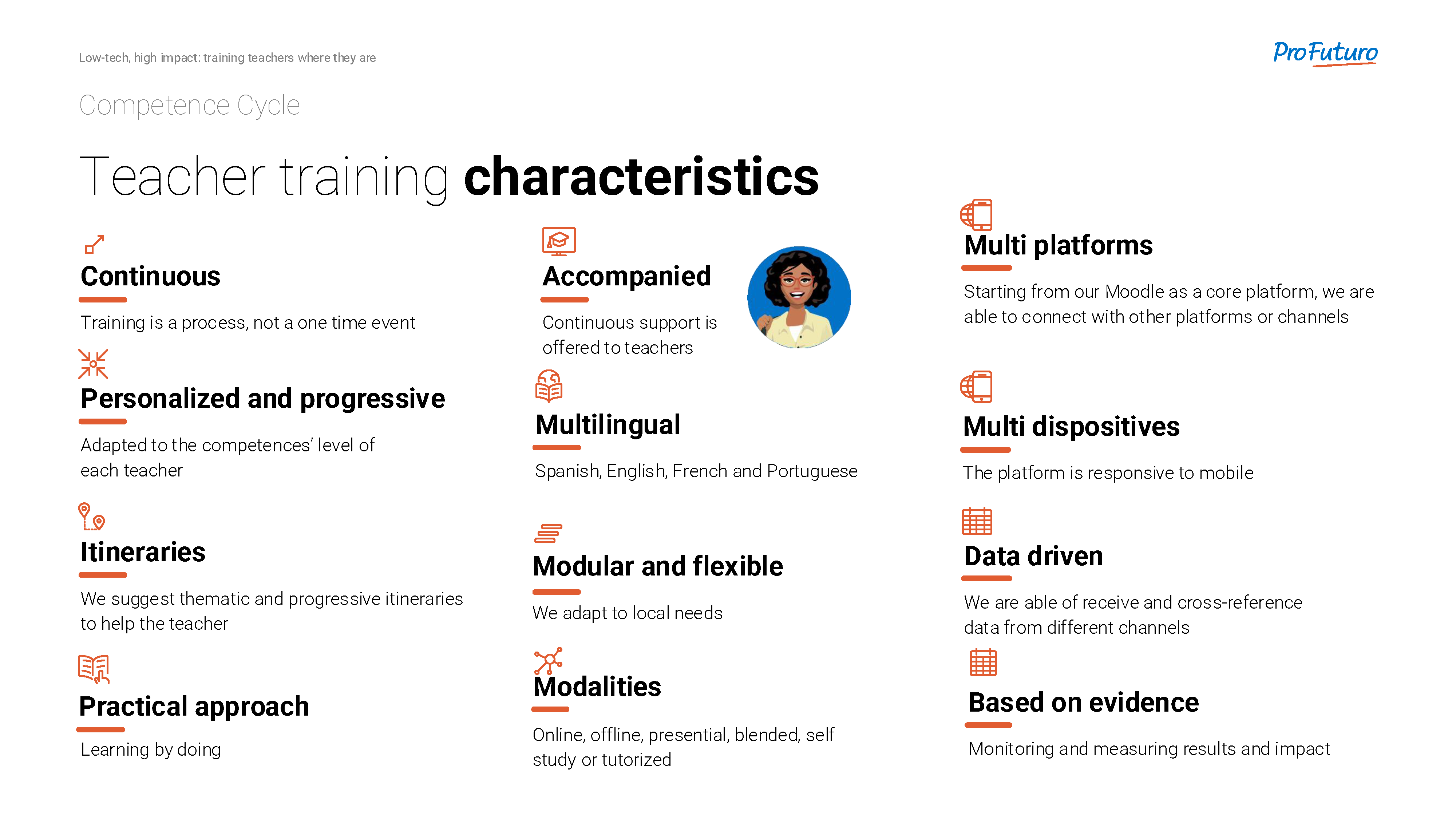
Low-tech, high impact: Training teachers where they are – Scalable Mobile-based Teacher Training Solutions: Lessons Learned and Perspectives

A webinar titled Low-tech, high impact: Training teachers where they are - Scalable Mobile-based Teacher Training Solutions: Lessons Learned and Perspectives will take place on 4 June at 15:00 CET (GMT+2) via Zoom. 

Organised by the International Teacher Task Force, its Thematic Group on Digital & AI, co-led by MESHGuides and Digital Promise, and the German Federal Ministry for Economic Cooperation and Development (BMZ), through GIZ, the webinar aims to showcase innovative low-tech training approaches that enable in-service teacher professional development in low-resource and crisis-affected contexts.

Click here to register for the webinar.

Background
With an estimated global need for 44 million new teachers by 2030 to meet SDG 4 targets, effective and scalable training solutions are critical. Conventional models often fail to reach teachers in remote or crisis-affected areas. The COVID-19 pandemic further underscored the urgency of equipping teachers with foundational and 21st-century skills needed for resilient and inclusive education systems. Low-tech mobile solutions, such as SMS and WhatsApp-based training, offer flexible, accessible, and scalable opportunities that meet teachers where they are.

Speakers and programme highlights

  • Carlos Vargas, Head of the Teacher Task Force Secretariat, will provide the welcome and background introduction.

  • A representative from GIZ will introduce the presented solutions.

  • ProFuturo, a leader in digital teacher training, will share insights and lessons learned from implementing teacher training programs in low-resource contexts.

  • The Future Teacher Kit (a joint initiative by GIZ, UNESCO, and UNICEF) will be presented, highlighting mobile-supported teacher training tailored for remote and crisis-affected settings. This segment will include contributions from the Jamaican Teaching Council, Ministry of Education Ecuador, UNESCO Ecuador, UNESCO Jamaica, and UNICEF’s Helsinki Global Innovation Learning Hub.

The webinar will also include Q&A sessions and a moderated discussion facilitated by the co-leads of the TTF Thematic Group on Digital Education and AI. Discussion topics will address key future skills for teachers, challenges and successful strategies in teacher training, as well as barriers and enablers for scaling mobile-based approaches and partnerships.

Objectives

  • To showcase effective low-tech teacher training models that support professional development in challenging environments.
  • To share implementation experiences and lessons learned from diverse contexts.
  • To facilitate dialogue among stakeholders, including education ministries, teacher training institutions, development partners, and civil society.
  • To explore practical challenges and opportunities in scaling mobile-based training and policy implications.

Expected outcomes
Participants are expected to gain a deeper understanding of mobile-based teacher training approaches and to be inspired to adapt and scale such models in their own national contexts.

Additional information
The webinar will be conducted in English only; interpretation will not be available.

Registration
Please register here.

Event
  • 28.05.2025

Low-tech, high impact: Training teachers where they are – Scalable Mobile-based Teacher Training Solutions: Lessons Learned and Perspectives

A webinar titled Low-tech, high impact: Training teachers where they are - Scalable Mobile-based Teacher Training Solutions: Lessons Learned and Perspectives will take place on 4 June at 15:00 CET (GMT+2) via Zoom. 

Organised by the International Teacher Task Force, its Thematic Group on Digital & AI, co-led by MESHGuides and Digital Promise, and the German Federal Ministry for Economic Cooperation and Development (BMZ), through GIZ, the webinar aims to showcase innovative low-tech training approaches that enable in-service teacher professional development in low-resource and crisis-affected contexts.

Click here to register for the webinar.

Background
With an estimated global need for 44 million new teachers by 2030 to meet SDG 4 targets, effective and scalable training solutions are critical. Conventional models often fail to reach teachers in remote or crisis-affected areas. The COVID-19 pandemic further underscored the urgency of equipping teachers with foundational and 21st-century skills needed for resilient and inclusive education systems. Low-tech mobile solutions, such as SMS and WhatsApp-based training, offer flexible, accessible, and scalable opportunities that meet teachers where they are.

Speakers and programme highlights

  • Carlos Vargas, Head of the Teacher Task Force Secretariat, will provide the welcome and background introduction.

  • A representative from GIZ will introduce the presented solutions.

  • ProFuturo, a leader in digital teacher training, will share insights and lessons learned from implementing teacher training programs in low-resource contexts.

  • The Future Teacher Kit (a joint initiative by GIZ, UNESCO, and UNICEF) will be presented, highlighting mobile-supported teacher training tailored for remote and crisis-affected settings. This segment will include contributions from the Jamaican Teaching Council, Ministry of Education Ecuador, UNESCO Ecuador, UNESCO Jamaica, and UNICEF’s Helsinki Global Innovation Learning Hub.

The webinar will also include Q&A sessions and a moderated discussion facilitated by the co-leads of the TTF Thematic Group on Digital Education and AI. Discussion topics will address key future skills for teachers, challenges and successful strategies in teacher training, as well as barriers and enablers for scaling mobile-based approaches and partnerships.

Objectives

  • To showcase effective low-tech teacher training models that support professional development in challenging environments.
  • To share implementation experiences and lessons learned from diverse contexts.
  • To facilitate dialogue among stakeholders, including education ministries, teacher training institutions, development partners, and civil society.
  • To explore practical challenges and opportunities in scaling mobile-based training and policy implications.

Expected outcomes
Participants are expected to gain a deeper understanding of mobile-based teacher training approaches and to be inspired to adapt and scale such models in their own national contexts.

Additional information
The webinar will be conducted in English only; interpretation will not be available.

Registration
Please register here.

Event
  • 29.10.2024

Webinar: Open Educational Resources in Vocational Education and Training: a leverage for inclusion and innovation

The objective of the webinar is to build capacity of Vocational Education and Training (VET) leaders and practitioners on the use of Open Educational Resources (OER), as a way to increase the innovation potential and inclusion of their educational offer. OER are  teaching and learning materials intentionally released with open licenses, that give users the right to own, share, and in most cases, modify them. Within Higher Education, the use of OER has shown the potential to reduce accessibility barriers and at the same time to support co-creation practices, but in the VET sector the use of these approaches is still limited.

During the webinar, the concept of OER will be introduced and exemplified through some successful practices of VET schools that are using OER in their daily work, followed by a discussion on how to further promote the use of such resources in TVET.

Register here.

Agenda

15:00 Welcome and Introduction to the webinar, Fabio Nascimbeni, ETF

15:05 Open Educational Resources: a smart approach for inclusion and innovation, Lisa Petrides, ISKME and ICDE

15:30 Cases of high-impact OER use within VET

  • OER Champions for colleges in Ontario. Mary Gu, eCampus Ontario
  • AI and OER, Open Content for Future Learning, Ulf Ehlers, Dual University of Baden Wuttemberg

16: 00 Existing OER support tools for VET practitioners and leaders

  • The OER practices collection, Max Ehlers, UNESCO-UNEVOC
  • The OER Advocacy Committee, ICDE, Ebba Ossiannilsson

16:20 Ideas and questions collection for future work

16:30 Closing

Article
  • pdf
  • 25.10.2024

Teachers as agents of and for change

This article reports on a systematic review exploring the role of teachers as change agents in education. The review aimed to synthesize current knowledge on five key aspects: 1. How teacher change...
Article
  • pdf
  • 25.10.2024

Teachers as agents of and for change

This article reports on a systematic review exploring the role of teachers as change agents in education. The review aimed to synthesize current knowledge on five key aspects: 1. How teacher change...